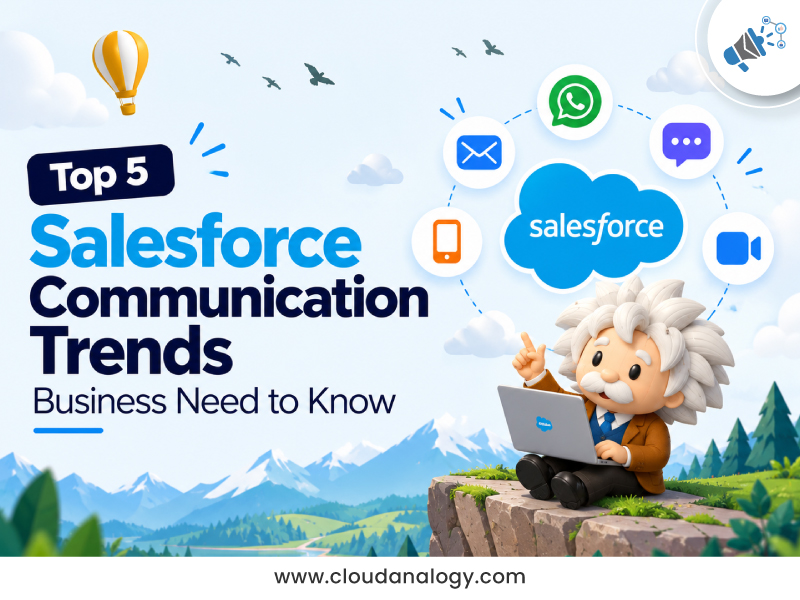
Customer communication is changing quickly. People expect businesses to respond through the channels they already use, including SMS, WhatsApp, email, and in-app messaging. For businesses using Salesforce, this shift creates new opportunities to connect conversations with customer data and business workflows.
Salesforce SMS messaging and Salesforce text messaging are becoming important tools for timely and personalized customer engagement. At the same time, AI, automation, unified data, and stronger security are changing how companies manage customer conversations.
Here are five Salesforce messaging trends businesses should watch as they build more connected and responsive customer communication strategies.
Table of Contents
- Multi-Channel Messaging Is Becoming the Norm
- AI Is Changing Customer Conversations
- Unified Data Is Making Messaging More Personal
- Businesses Are Moving Toward Proactive Messaging
- Security and Compliance Are Becoming Essential
- Conclusion
Multi-Channel Messaging Is Becoming the Norm
Customers do not always want to call a business or wait for an email response. Many prefer quick, convenient communication through SMS, WhatsApp, social messaging, or in-app chat.
This is driving businesses to connect multiple communication channels with Salesforce. Instead of managing conversations across separate platforms, teams can bring customer interactions closer to the CRM.
Salesforce SMS messaging can support use cases such as:
- Appointment confirmations and reminders
- Order and delivery updates
- Payment notifications
- Customer support messages
- Event reminders
- Follow-ups and service alerts
Salesforce text messaging can also make two-way communication easier, allowing customers to respond while teams maintain customer context within their workflows.
For businesses communicating with large customer groups, Salesforce bulk messaging can help deliver relevant updates at scale while reducing repetitive manual work.
AI Is Changing Customer Conversations
AI is becoming an important part of modern customer communication. Instead of relying entirely on human agents, businesses can use AI-powered assistants and agents to handle common questions and routine requests.
AI can help businesses:
- Answer frequently asked questions
- Route customer requests
- Summarize conversations
- Recommend next steps
- Support 24/7 customer service
- Escalate complex issues to human teams
Salesforce’s Agentforce approach further supports the move toward AI-powered customer service, where digital agents can assist with routine interactions while employees focus on higher-value conversations.
The goal is not simply to automate communication. It is to make responses faster while giving employees the information they need to provide better service.
Unified Data Is Making Messaging More Personal
A message is more useful when it is based on the customer’s actual situation. For example, a generic reminder may be less effective than a message that references a customer’s appointment, order, subscription, or previous interaction.
This is where CRM and data integration become important. When communication data relates to Salesforce customer records and other business systems, companies can create more relevant messaging workflows. Salesforce Flow and connected data can help trigger communications based on specific customer or business events.
Businesses Are Moving Toward Proactive Messaging
Customer service has traditionally been reactive. A customer raises a question, and the business responds. That model is changing. Businesses are increasingly using automated messaging to reach customers before an issue becomes a problem.
Examples include:
- Appointment reminders before scheduled visits
- Shipping updates after an order
- Payment reminders before due dates
- Renewal notifications
- Event reminders
- Service status updates
- Personalized promotional messages
Salesforce bulk messaging can be useful when businesses need to communicate important updates to larger customer segments. However, effective bulk communication should still be targeted and relevant rather than sending the same message to everyone.
Combining segmentation, customer data, and automation can help businesses send the right message at the right time.
Security and Compliance Are Becoming Essential
As customer communication moves into digital channels, security and privacy become increasingly important. Businesses may handle sensitive customer information through SMS, email, chat, and other messaging channels. This makes it important to establish clear controls around customer data, consent, access, and communication records.
A Salesforce-based communication strategy should consider:
- Customer consent and preferences
- Secure data handling
- User access controls
- Communication records
- Regulatory requirements
- Message delivery tracking
- Data retention policies
Security should not be treated as an afterthought. It needs to be part of the communication strategy from the beginning.
Conclusion
Customer communication is moving toward faster, more connected, and more personalized experiences. Salesforce SMS messaging, Salesforce bulk messaging, and Salesforce text messaging can help businesses engage customers through convenient channels while connecting conversations with CRM data and workflows.
At the same time, AI, automation, unified data, proactive alerts, and stronger security are reshaping how companies manage communication. Businesses that bring these capabilities together can reduce manual work, respond faster, and create more consistent customer experiences across channels.
Frequently Asked Questions (FAQs)
What is Salesforce SMS messaging?
Salesforce SMS messaging allows businesses to send and manage customer text communications through Salesforce-connected solutions and workflows.
What is Salesforce bulk messaging?
Salesforce bulk messaging enables businesses to send relevant messages to multiple customers or selected customer segments at scale.
How does Salesforce text messaging help businesses?
Salesforce text messaging helps businesses send reminders, updates, alerts, and support messages while keeping customer communication connected to CRM processes.
Can Salesforce messaging be automated?
Yes. Salesforce messaging can relate to workflows and automation to trigger communications based on customer actions or business events.
How can AI improve Salesforce messaging?
AI can help answer routine questions, route conversations, summarize interactions, and support faster customer service.
Is Salesforce bulk messaging useful for customer updates?
Yes. Salesforce bulk messaging can help businesses communicate important updates to selected customer groups efficiently and at scale.
Why is unified data important for messaging?
Unified data gives businesses better customer context, helping them deliver more relevant and timely messages across communication channels.